
A smart thermostat is a good investment in a Lowcountry home. It is also the single piece of HVAC equipment most likely to be installed incorrectly, and when it is wrong on a heat pump, it quietly raises your power bill instead of lowering it.
The device itself is simple to mount on the wall. The part that matters is what happens in the configuration menu afterward — how it is told to stage your equipment, when it is allowed to call for backup heat, and whether it understands what kind of system it is attached to. That is where we spend our time.
Why heat pumps are where DIY installs go wrong
Most homes around Charleston, Summerville and Mount Pleasant run heat pumps rather than furnaces. A heat pump moves heat instead of making it, which is efficient in our mild winters. It also has an electric backup heat strip for the coldest hours, and that strip uses a great deal more electricity than the heat pump itself.
A thermostat that does not know it is controlling a heat pump will treat backup heat as ordinary heat. It energizes the strips whenever the room is a couple of degrees below setpoint. The house warms up, the homeowner never notices anything wrong, and then the January bill arrives with a number nobody expects.
Auxiliary heat lockout
A correctly configured thermostat has an outdoor temperature threshold below which auxiliary heat is permitted, and above which it is locked out entirely. In our climate that lockout point matters a lot, because Lowcountry winters spend most of their hours in the range where the heat pump alone is perfectly capable. Set it wrong, or leave it at a factory default meant for a colder region, and the strips run on mornings they had no business running.
Staging and droop settings
Two-stage and variable-speed equipment needs the thermostat to know how and when to move between stages. Get it wrong and the system either short-cycles — which in this climate means it never runs long enough to pull humidity out of the air — or it jumps to a higher stage far sooner than it should. Long, low, steady run times are what keep a Charleston house from feeling clammy.
Emergency heat is not a shortcut
The emergency heat setting exists for one situation: the heat pump has failed and you need heat until we get there. It bypasses the heat pump completely and runs on strips alone. We meet homeowners who flip it on every cold snap because it warms the house faster. It does, and it costs several times as much to do it. If your house is not heating well on a cold morning, the answer is a service call, not emergency heat — see heat pump repair.
The C-wire question
Smart thermostats need continuous power for their display, Wi-Fi radio and processor. That comes from a common wire, the C-wire. Older homes in the area — and plenty of houses built before smart thermostats existed — were wired with only the conductors the old mercury or digital stat needed, and no C.
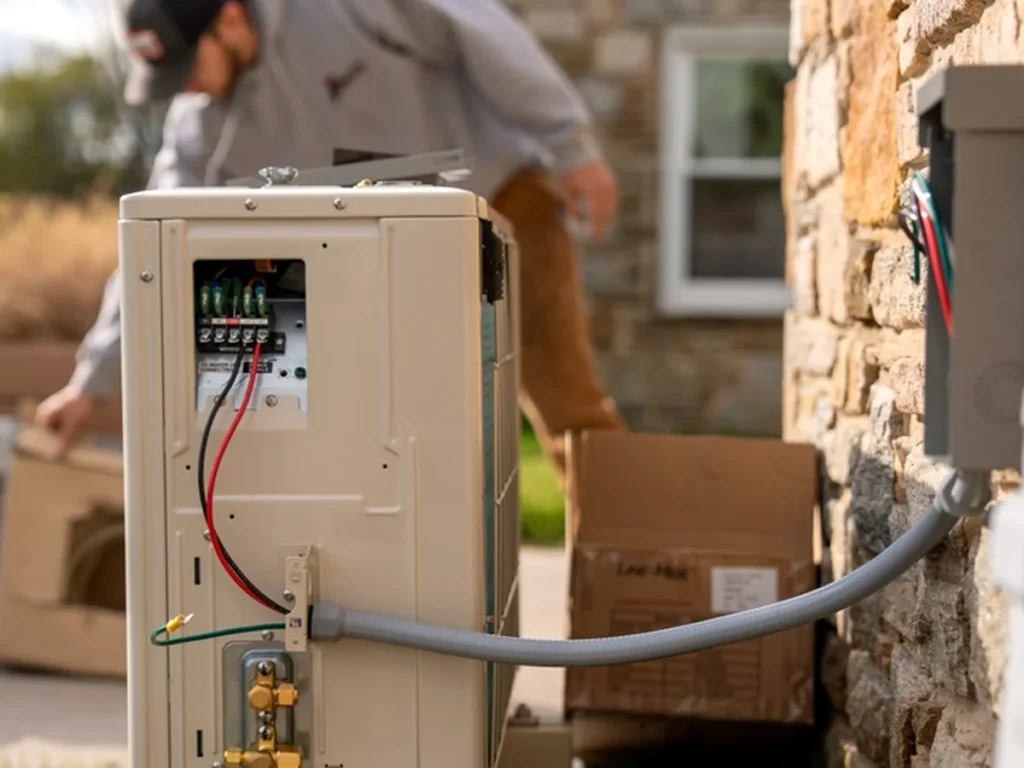
There are workarounds: a power-stealing setup, an add-a-wire adapter at the air handler, or running new thermostat cable. Power-stealing is the one that causes trouble — on some equipment it shows up later as a system that cycles oddly or a control board that gets unhappy. When we can run a proper C-wire, we do.
We check what wiring you have before recommending a model, so you do not buy a thermostat your house cannot properly power.
What a correctly set up thermostat gives you in this climate
- Humidity awareness. Some models can extend run time or slow the fan to improve moisture removal, which is worth real comfort in a place where the complaint is usually dampness rather than heat. It works even better alongside a whole-home dehumidifier.
- Remote visibility. Useful for a second home, a rental, or a house on Isle of Palms or Folly Beach you are not at every week. You will know if the system stops holding temperature before you arrive to a wet, hot house.
- Filter and maintenance reminders. Genuinely helpful during pollen season, when filters load fast.
- Sensible scheduling. In an 8-month cooling season, small setbacks add up. Deep setbacks do not work well with heat pumps, and a properly configured thermostat handles the difference for you.
Setbacks, and the mistake people make with heat pumps
With a gas furnace you can drop the temperature ten degrees overnight and recover quickly. A heat pump cannot recover that fast, so it calls the backup strips to catch up — and you spend more on the recovery than you saved overnight.
The fix is either modest setbacks of two or three degrees, or a thermostat with adaptive recovery configured to start warming early using the heat pump alone. Both work. Neither is the default on most boxes out of the store.
What we do on an installation
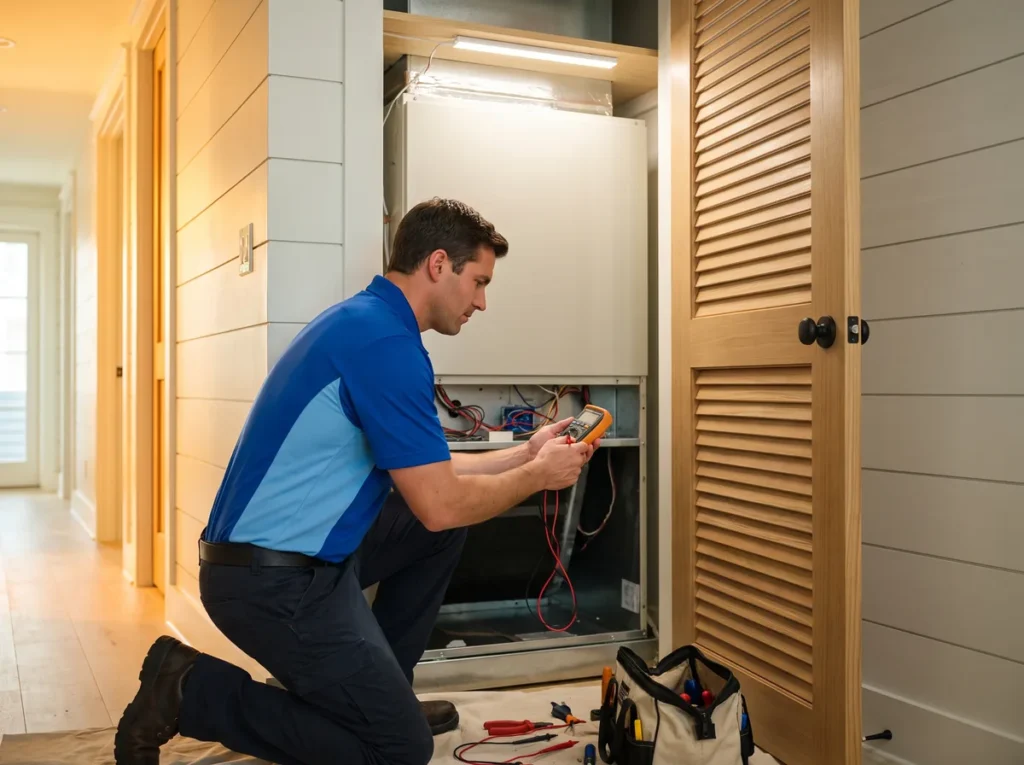
We confirm your equipment type — single stage, two stage, variable speed, heat pump, dual fuel — and check the existing wiring at both the thermostat and the air handler. We install the correct model for that system, set the equipment type, staging, cycle rates and auxiliary lockout to match, then run the system through heating and cooling to confirm each stage energizes when it should and nothing calls the strips that should not.
Then we show you how to use it, including the settings we would leave alone. If you are also planning a system replacement, we will make sure the controls match the new equipment.
You get a written itemized quote before work begins.
If your power bill jumped this winter, or your smart thermostat never seemed to do what it promised, call or text 843-609-5740, or book a visit online.