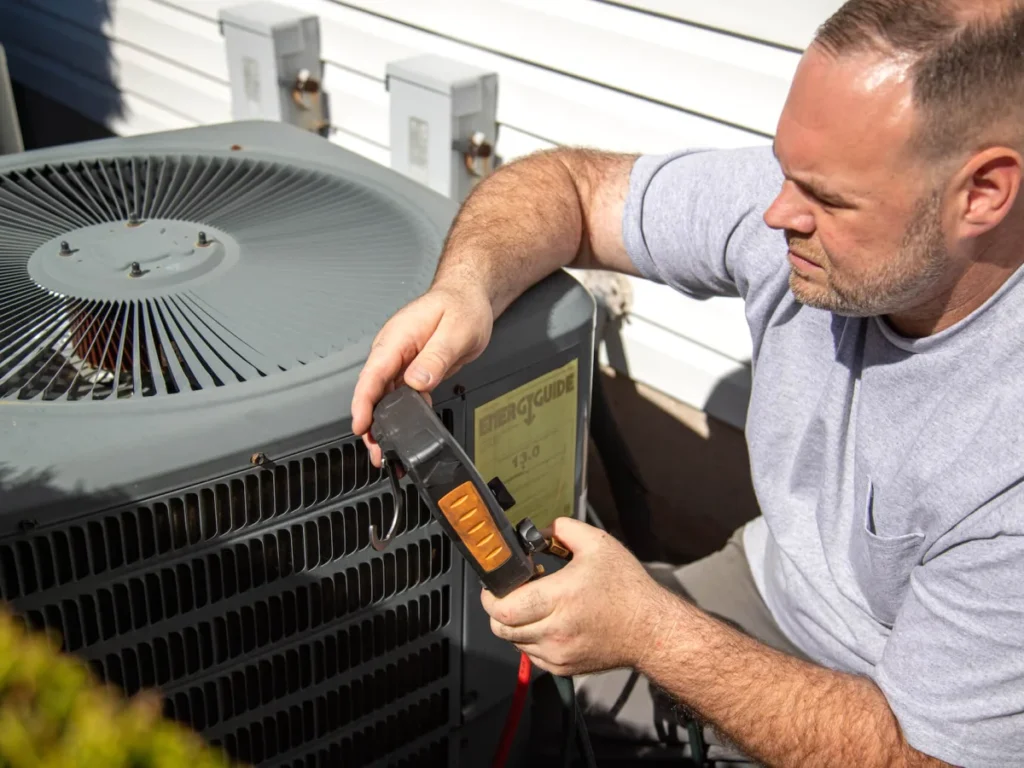

A heat pump is one machine that cools your house in July and heats it in January. It does not burn anything — it moves heat rather than making it, which is why it can deliver more heating energy than the electricity it consumes. In the Lowcountry, where truly cold weather lasts weeks rather than months, that arrangement is hard to beat.
It is also why the great majority of homes around Summerville, Charleston and Mount Pleasant already have one, whatever the homeowner calls it. If you are replacing a system, a heat pump is usually the default answer here, and the real decisions are about sizing, staging and how the backup heat is set up.
Why this climate suits a heat pump
Heat pumps get less efficient as outdoor temperatures drop. That is the honest limitation, and it is the reason they were slow to catch on in the north. Our winters sit mostly in the 40s and 50s, which is squarely in the range where a heat pump does its best work.
Meanwhile our cooling season runs about eight months. Since the same equipment handles both, you are buying one system instead of two, maintaining one system instead of two, and there is no combustion, no flue and no carbon monoxide risk anywhere in the house.
Sizing for humidity, not just for heat
We size with a Manual J load calculation — measuring the conditioned space, the windows and their orientation, insulation, ceiling heights, shading and air leakage. Matching whatever tonnage was there before just repeats whatever mistake was made last time.
Oversizing is the mistake that matters most here, and it shows up in summer rather than winter. A heat pump that is too large satisfies the thermostat in a few minutes and shuts off, and moisture removal only happens while the coil is running and wet. You end up with a house that is cool and still feels damp — the single most common comfort complaint we hear, and one no amount of extra capacity will fix.
The backup heat strips need sizing too. Fitting more electric resistance heat than the house can ever need is cheap for the installer and expensive for you every time a cold morning brings them on.
Single-stage, two-stage and variable-speed
A single-stage heat pump is either off or running at full output. It is the least expensive to install and the least comfortable to live with, because it cycles hard.
A two-stage system runs on a lower setting most of the time and calls on full capacity only when it needs it. A variable-speed, inverter-driven system modulates continuously and can hold a low output for hours.
In a humid climate the comfort difference is larger than the efficiency difference. Long, gentle run times are what actually dry a house out, so variable-speed equipment often solves a clamminess problem that no thermostat setting ever could. It also holds temperature more evenly between the front and back of the house, and it is noticeably quieter both inside and out.
Dual fuel, where you already have gas
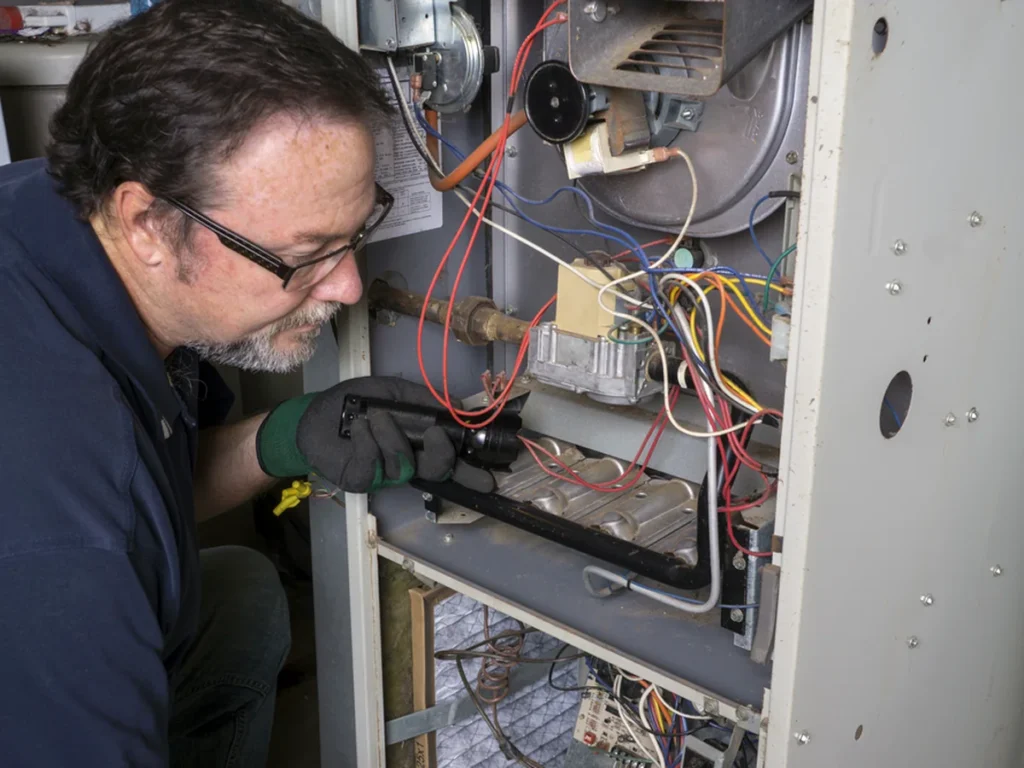
Gas furnaces are the minority in this area, but they do exist — particularly in parts of West Ashley, older Mount Pleasant and a scattering of newer construction. If you have natural gas at the property, a dual-fuel setup is worth considering: a heat pump handles everything down to a chosen outdoor temperature, and below that the system hands off to the gas furnace instead of electric strips.
You get heat pump efficiency for the vast majority of our winter and gas heat for the handful of genuinely cold mornings. If you are keeping a working furnace, we can pair a new heat pump to it rather than replacing both, and we will inspect the furnace before we do — see our furnace service page for what that involves.
Coastal installations and storm season
Salt corrodes the aluminum fins, the cabinet and the electrical contacts of an outdoor unit. On Isle of Palms, Sullivan’s Island, Folly Beach, Kiawah or anywhere within a few miles of the water, standard equipment simply does not last as long. Coated coils and corrosion-resistant cabinets cost more up front and are usually the cheaper decision over the life of the system.
We also talk through elevated equipment stands where flooding is a risk, proper hurricane strapping, and whole-system surge protection. It is a short conversation in April and an expensive one in September.
What the installation includes
We inspect your ductwork and measure static pressure before quoting, because a new system pushing air through leaking crawlspace duct will never perform to its rating. If a section needs sealing or replacement, you will know before you sign, not afterward. We also set up and configure the thermostat properly, which is the difference between backup heat that behaves and backup heat that runs all winter.
In-home estimates on replacement systems are free. What drives the price is the capacity and type of equipment, the efficiency level, the state of your ductwork and electrical, and the physical difficulty of the install. You get an itemized written quote with options, and financing is available subject to approved credit. Nobody here has a reason to push you up a tier.
Every install is backed by our 100% satisfaction guarantee, and we recommend booking your first seasonal service the following fall. To arrange a free estimate, call or text 843-609-5740 or get in touch here.