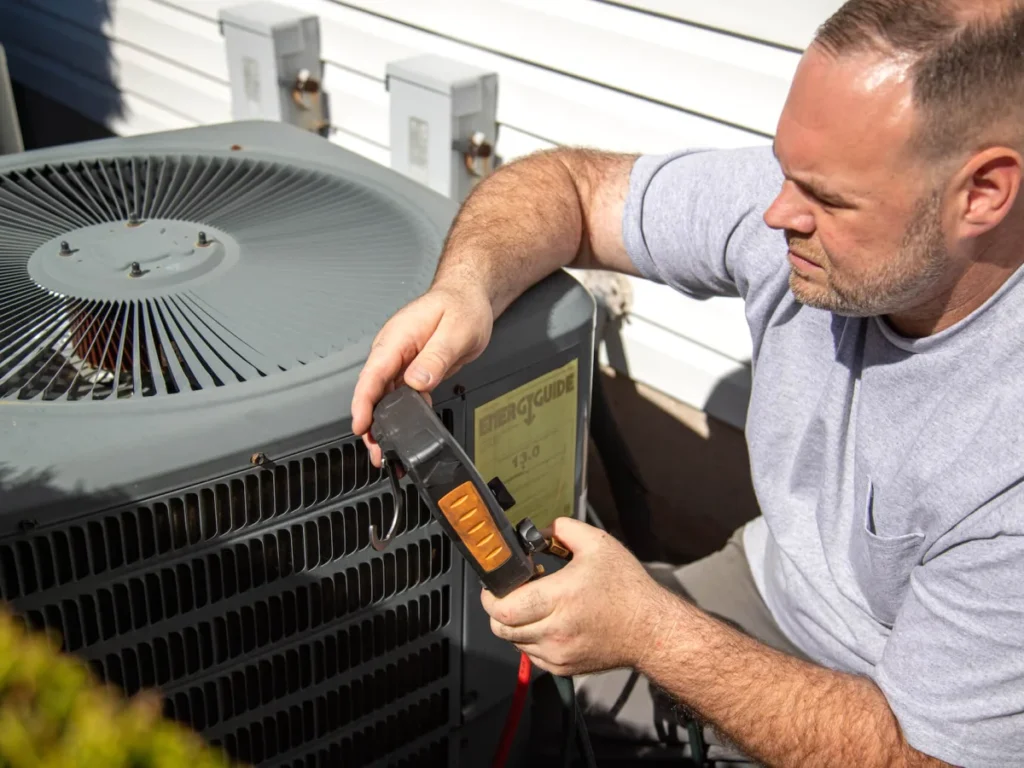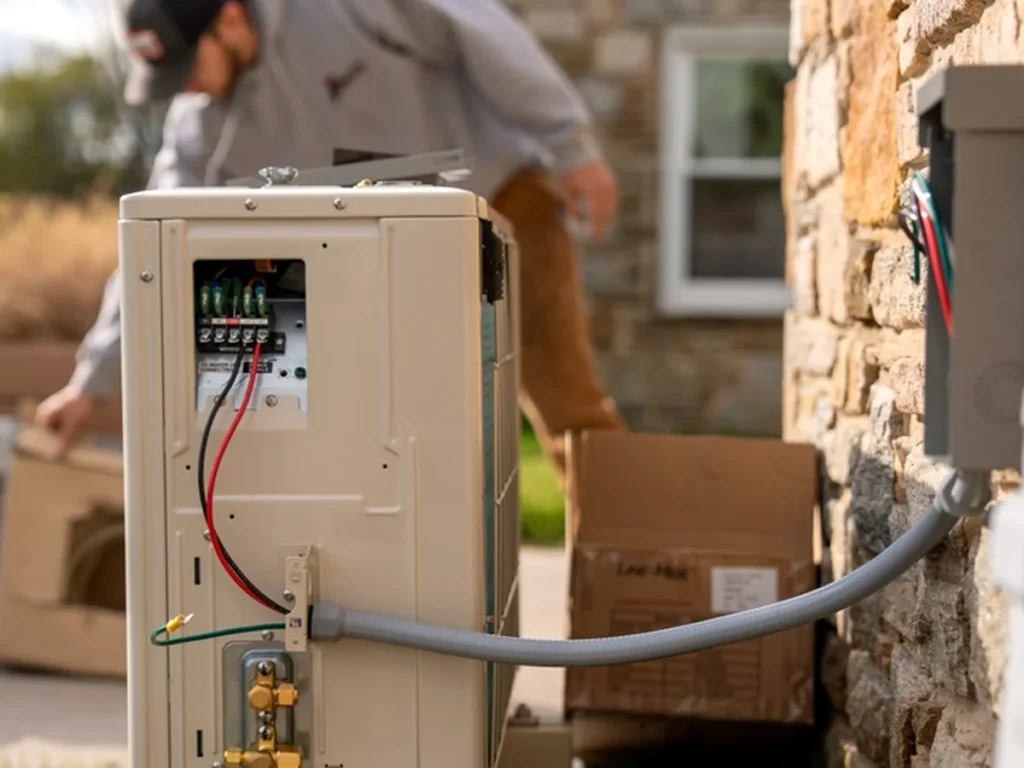

Start with something most Charleston-area contractors will not tell you: you probably do not have a furnace. The great majority of homes in the Lowcountry heat with a heat pump, and almost everyone calls that machine a furnace out of habit. If your outdoor unit runs on a cold morning, that is a heat pump, and the page you want is heat pump repair.
Gas furnaces do exist here. You find them in parts of West Ashley and older Mount Pleasant, in some downtown renovations, and in scattered newer construction where natural gas was run to the property. If you have one, it deserves a different kind of attention than a heat pump does, because a furnace burns fuel inside your house.
How to tell which one you have
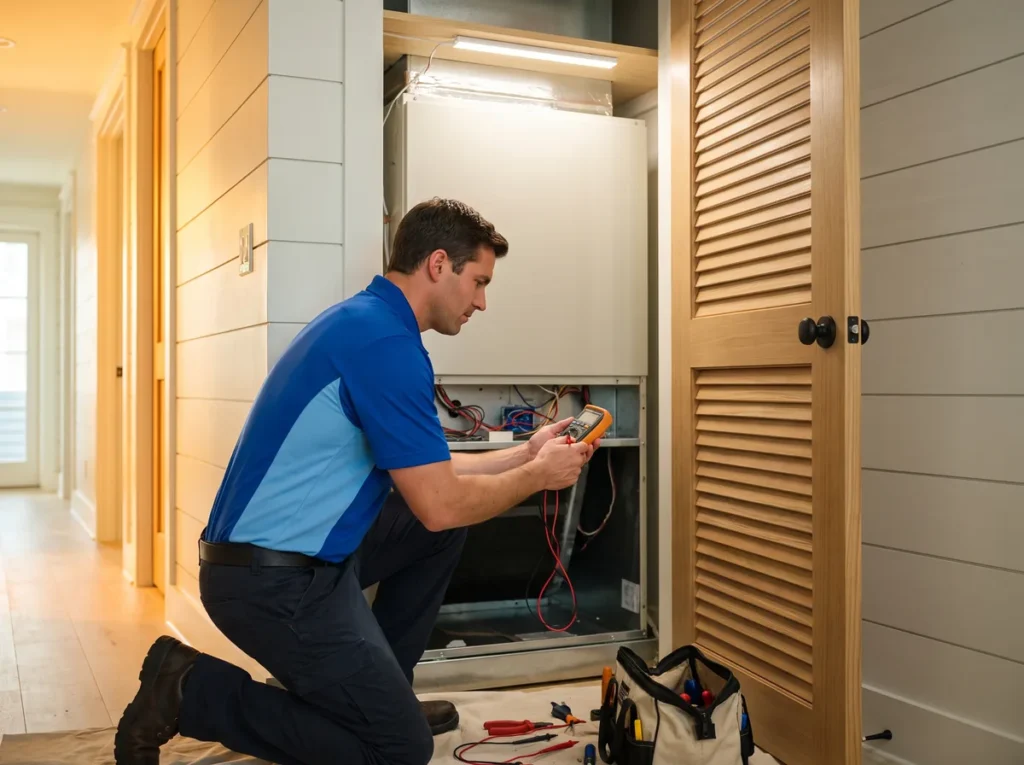
A gas furnace lives indoors — in a closet, the attic or a garage — and has a flue pipe venting to the outside. It will have a gas line running to it and, on modern units, a small window where you can see a status light blinking. When it fires you hear ignition and then a burner.
A heat pump has an outdoor unit that runs in winter and no flue, no gas line and no combustion. If you are unsure, tell us what you see when you call and we can usually sort it out on the phone before we dispatch anyone.
Safety comes before the repair
Some furnace problems are comfort problems. A few are not, and they are worth knowing cold.
If you smell gas
Do not touch light switches, do not use your phone indoors, and do not try to find the source. Get everyone out of the house, then call your gas utility’s emergency line and 911 from outside. Only once the gas side is confirmed safe does a heating contractor have any business in the building.
If a carbon monoxide alarm sounds
Get outside and call 911. Do not restart the furnace to see whether it happens again. Carbon monoxide is colorless and odorless, and the early symptoms — headache, nausea, drowsiness that improves when you leave the house — are easy to blame on something else. Every home with a gas appliance should have working CO alarms on each level, and it costs nothing to test them today.
Cracked heat exchangers
The heat exchanger is the metal wall between the combustion gases and the air you breathe. Years of heating and cooling cycles can crack it, and a cracked exchanger can let combustion byproducts into the supply air. There is no safe patch for this. When we find one, we shut the furnace down and tag it, and we will explain exactly what we saw and show you the inspection. It is the one place where we will not offer you a cheaper option, because there is not an honest one.
A short heating season hides problems
A furnace in Minnesota runs most of the winter, so a developing fault announces itself quickly. Here, a furnace might run in earnest for a few weeks a year. A cracked exchanger, a corroded flue, a marginal pressure switch or a lazy igniter can sit undetected for two or three seasons.
Long idle stretches cause their own trouble. Dust and insects settle in the burner compartment, condensate lines and drain traps dry out and then clog, and rodents find the flue an attractive place to nest. In our humidity, an unused furnace cabinet corrodes quietly all summer. This is the real argument for an annual heating inspection here — not that the system works hard, but that it does not work often enough to warn you.
What usually fails
- Igniter. The most common furnace repair there is. Hot surface igniters are brittle and fail with age, usually with no warning.
- Flame sensor. Oxidizes over time until the furnace lights, runs a few seconds and shuts off. Repeatedly. This is a cleaning, not a replacement.
- Pressure switch or inducer motor. Often triggered by a blocked flue or a clogged condensate drain rather than the part itself, which is why diagnosis matters.
- Limit switch tripping. Usually a symptom of restricted airflow — a badly clogged filter, a closed-off return or duct problems. Fix the airflow, not just the switch.
- Gas valve or control board. Less common, more expensive, and worth a second opinion if someone quoted one without showing you a reading.
- Blower motor or capacitor. The blower runs in cooling season too, so it accumulates far more hours than the burner does.
Note how many of those trace back to airflow. If your filter is loading up faster than expected, especially during pine pollen season, better filtration and correct filter sizing solve more heating faults than people expect.
What a visit looks like
We diagnose before we quote. That means combustion inspection, flue and venting check, gas pressure, safety controls, airflow and temperature rise, plus a look at the heat exchanger. You get photographs of what we found, a firm price before any work starts, and a straight answer about what can safely wait.
If the furnace is old enough that replacement makes more sense, we will give you both numbers. In this climate that conversation often ends with a heat pump instead.
No heat, or a furnace behaving strangely? Call or text 843-609-5740 or reach us here. Across the tri-county area.