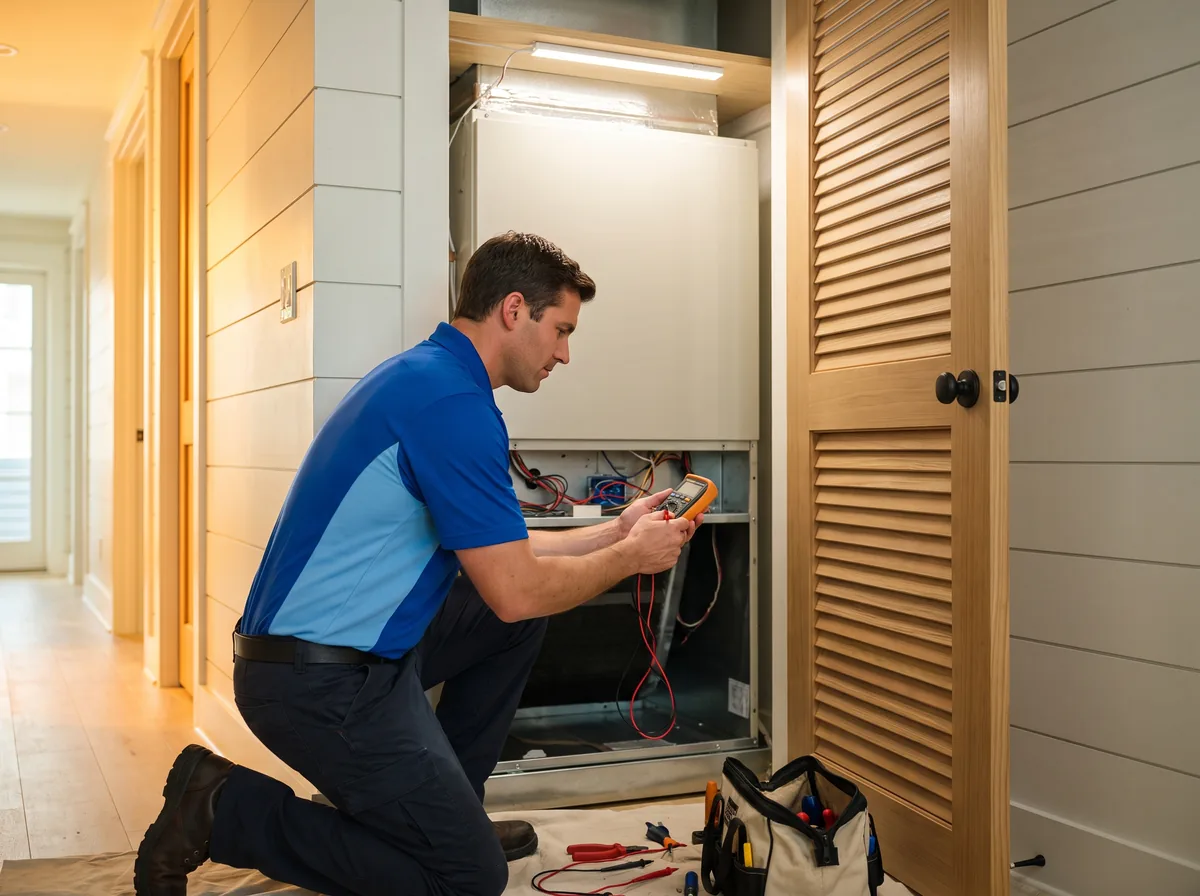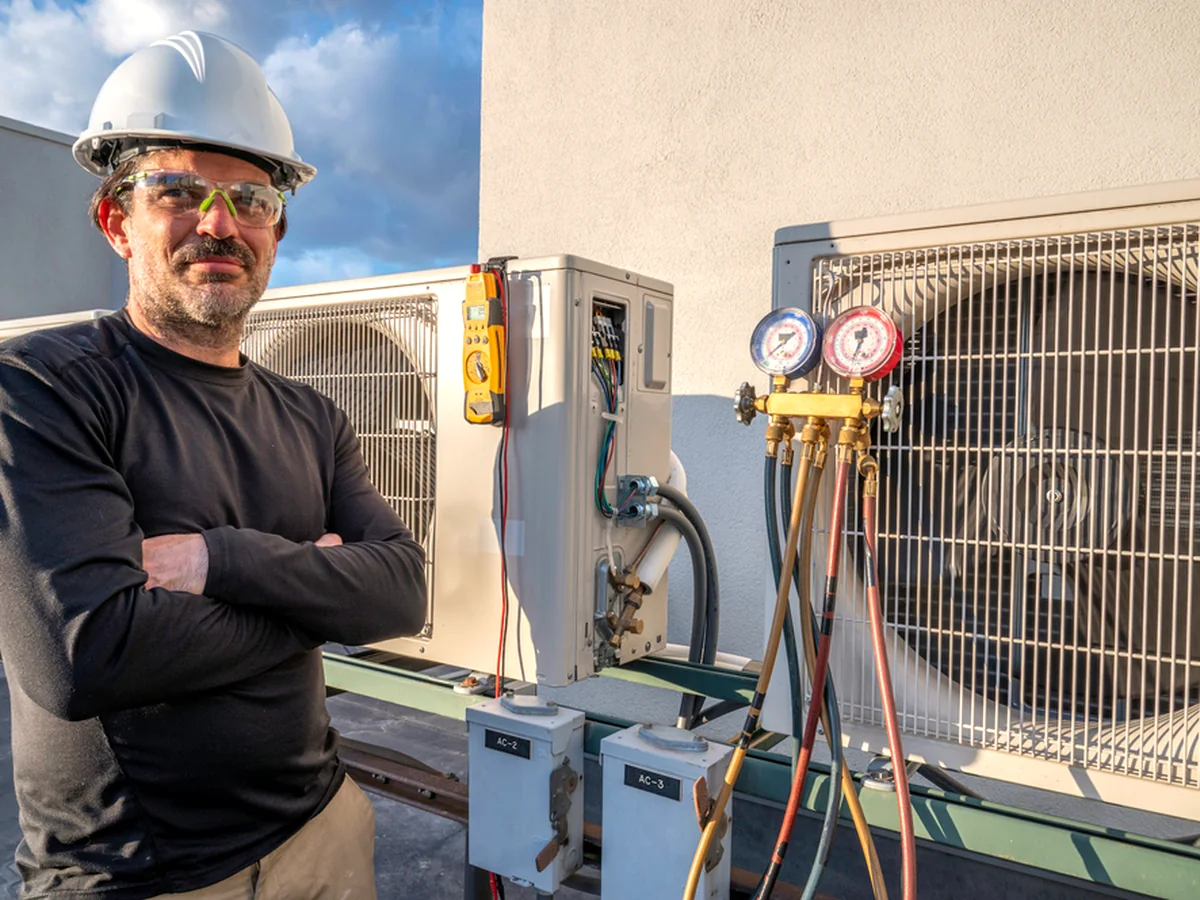



A ductless mini split is a heat pump split into two pieces: a small outdoor unit and one or more indoor heads mounted on a wall, in a ceiling, or low along the floor. The two are connected by a line set about three inches across, which means the only hole in your house is roughly the size of a coffee mug.
That single detail is why mini splits solve problems in the Lowcountry that nothing else solves. Plenty of homes here were never built with ductwork, and plenty of rooms were added later without any practical way to extend it.
Where a mini split is the right answer
Historic homes with no ductwork
Much of the peninsula, and older stock in Wagener Terrace, Hampton Park Terrace and the Old Village in Mount Pleasant, was built long before central air existed. Retrofitting ducts into a single-family historic home usually means dropped ceilings, boxed-in soffits, or losing a closet on every floor — and often it is simply not possible without altering plaster and trim you would rather leave alone.
A mini split needs no duct at all. It also lets you condition the rooms you actually use instead of paying to cool a whole floor. Where a property falls under preservation review, the outdoor unit’s placement and screening matter, and we will work with you on siting it where it is not visible from the street.
Additions, bonus rooms and sunrooms
The bonus room over the garage is the classic Lowcountry comfort complaint. It sits under a hot roof, it is at the far end of an undersized duct run, and it is ten degrees off the rest of the house all summer. Adding a room to the existing system usually starves everywhere else instead of fixing that room.
The same applies to sunrooms, enclosed porches, in-law suites and any addition where the original system was already at its limit. A dedicated head gives that space its own thermostat and stops it fighting with the rest of the house.
Garages, workshops and offices
If you have turned a garage into a gym, a shop or a home office, a mini split will make it usable in August. These spaces are often uninsulated and detached from the main system, which makes a self-contained zone the simple option.
Zoning is the part people underestimate
A single outdoor unit can support several indoor heads, each with its own thermostat. The upstairs bedrooms can sit at 70°F overnight while the living room stays at 75°F, and rooms nobody is using can be turned down to almost nothing.
With a conventional ducted system every room shares one thermostat, which is why the front of the house is always different from the back. Zoning removes that argument entirely.
Why they suit this climate
Nearly all mini splits sold today use inverter-driven compressors, which means they modulate rather than cycling on and off. In a humid climate that is a genuine advantage: long, low-output run times are what actually removes moisture from the air, so a properly sized mini split tends to leave a room feeling dry rather than cold and clammy.
They also skip duct losses altogether. In an older home with ducts in a vented crawlspace, a real share of the conditioned air never reaches the room — a mini split delivers it directly. And because the compressor is outside and the indoor head is a small fan, they are quiet enough to put in a bedroom.
Being heat pumps, they heat as well as cool, which covers a Charleston winter comfortably without touching your existing system.
The honest downsides
We would rather you hear this from us than find out after installation.
- You can see the indoor head. It is a unit on your wall or ceiling. Slim ducted and ceiling-cassette options exist and hide better, but they cost more and need a chase or an accessible ceiling.
- Cost scales with zones. One head for one room is very cost-effective. Whole-house ductless with six heads may not be cheaper than a conventional system, and if your home already has usable ductwork, a central system is often the better value.
- Filters need attention. Each head has its own washable filter that needs rinsing regularly, especially through pine pollen season.
- Placement matters and cannot be undone easily. The head location determines how the room feels, so we plan it before we drill.
What we do before quoting
We measure the space and calculate its load rather than guessing at capacity, because an oversized mini split short-cycles and leaves the room damp exactly like an oversized central system does. We look at where the line set can run, where condensate will drain, and where the outdoor unit can sit — elevated, if you are somewhere that floods.
Estimates are free and done at the house, you get an itemized written quote, and financing is available subject to approved credit. If a mini split is not the right answer for your situation, we will tell you that instead of selling you one.
We install ductless systems throughout the tri-county area, including Charleston, Mount Pleasant and Summerville. Call or text 843-609-5740 or book a free estimate.